
The clock starts the moment water appears
When a pipe bursts, a sump fails, or a sewer backs up, the most important thing to understand is that mold growth is a matter of time, and the clock starts immediately. Mold can begin establishing itself in wet materials within 24 to 48 hours. That means the actions you take in the first day or two genuinely determine whether you're dealing with a cleanup or a full remediation weeks later. This guide walks through what to do, in order, after water damage in a Saint Paul home — whether it's a frozen pipe that let go in January, a sump that quit during the spring melt, or a backup after a summer storm.
First: stop the water and stay safe
Before anything else, stop the source if you safely can. For a burst supply pipe, shut off the water at the main valve. For an appliance leak, shut its supply. Then think about safety: if water is anywhere near electrical outlets, the panel, or appliances, shut off power to the affected area at the breaker before you wade in, or call an electrician if you can't do it safely. And treat any sewer backup or flood water as contaminated — that water can carry sewage and bacteria, so wear gloves and boots, keep kids and pets away, and don't handle it casually. If the contamination is significant, this is a job for professionals from the start.
Document everything for insurance
Before you start hauling things out, photograph and video everything — the source, the standing water, the affected rooms, and the damaged belongings. This documentation is what supports an insurance claim, and it's much easier to over-document now than to wish you had later. Note the date and time and what happened. Then call your insurer promptly to start the claim and ask what your policy requires, because some policies have specific notification and mitigation requirements. Our Minnesota mold and insurance guide explains what's typically covered and what isn't.
Get the water out fast
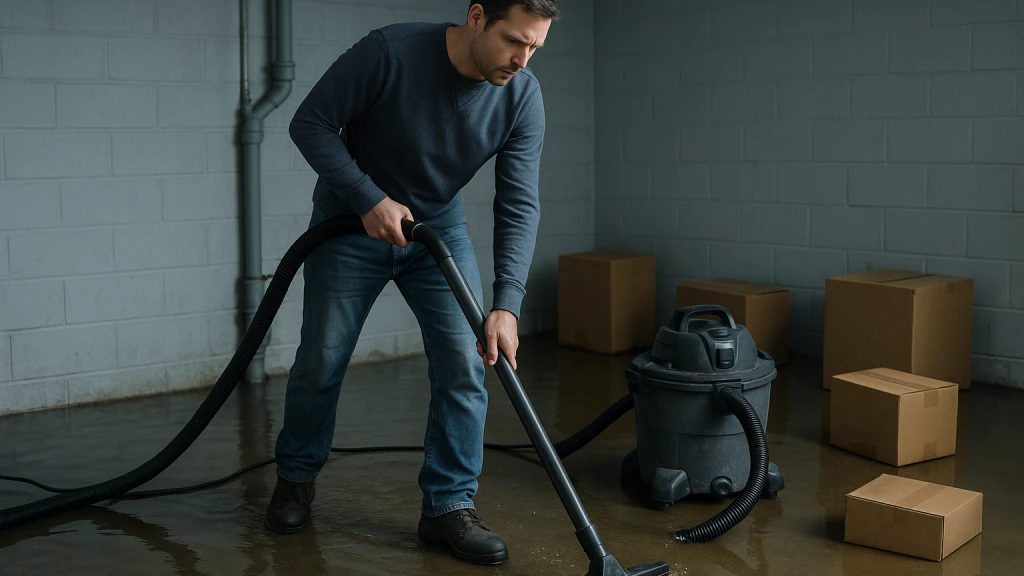
Now move quickly to remove the water and start drying, because this is the step that beats the mold clock. Extract standing water with a wet/dry vacuum or pump. Pull up soaked rugs and carpet. Get air moving with fans and open windows if the outdoor air is drier than indoors, and run dehumidifiers hard. Move wet belongings and furniture out of the area to dry separately. The goal is to get materials genuinely dry — not just surface-dry — within that 24-to-48-hour window. For anything beyond a minor amount of water, professional-grade extraction and structural drying equipment makes a real difference, which is what a water damage remediation pro brings.
Know what can be saved and what can't
Some materials dry out and are fine; others trap water and have to go. Non-porous things — sealed concrete, metal, solid wood, glass, hard plastics — can usually be cleaned and dried. Porous materials that soaked up contaminated or long-standing water — drywall, insulation, carpet and pad, ceiling tiles, particleboard — often need to be removed, because they hold moisture and mold in ways you can't clean out. Drywall in particular wicks water upward well above the visible waterline, so it frequently has to be cut out higher than you'd expect. A pro can tell you what's salvageable and what's a mold risk if kept.
Watch for mold over the following weeks
Even with a fast, thorough response, keep an eye (and a nose) on the affected area for the next several weeks. A returning musty smell, new staining, or warping means moisture stayed somewhere it shouldn't and mold may be establishing. This is especially likely in a finished basement, where water hides behind the finishes. Our signs of mold guide covers what to watch for. If anything suggests lingering moisture, an inspection now is far cheaper than a remediation later.
When to call for help
Call a professional immediately if the water is contaminated (sewage or flood water), if the affected area is large, if water has gotten into walls or under flooring where you can't dry it yourself, or if more than a day has already passed. Fast professional drying in the first 48 hours can prevent a mold problem entirely, which is far cheaper than remediation after the fact. Saint Paul Mold Remediation can connect you, at no cost, with licensed local water-damage and mold pros — tell us what happened and we'll match you quickly.