
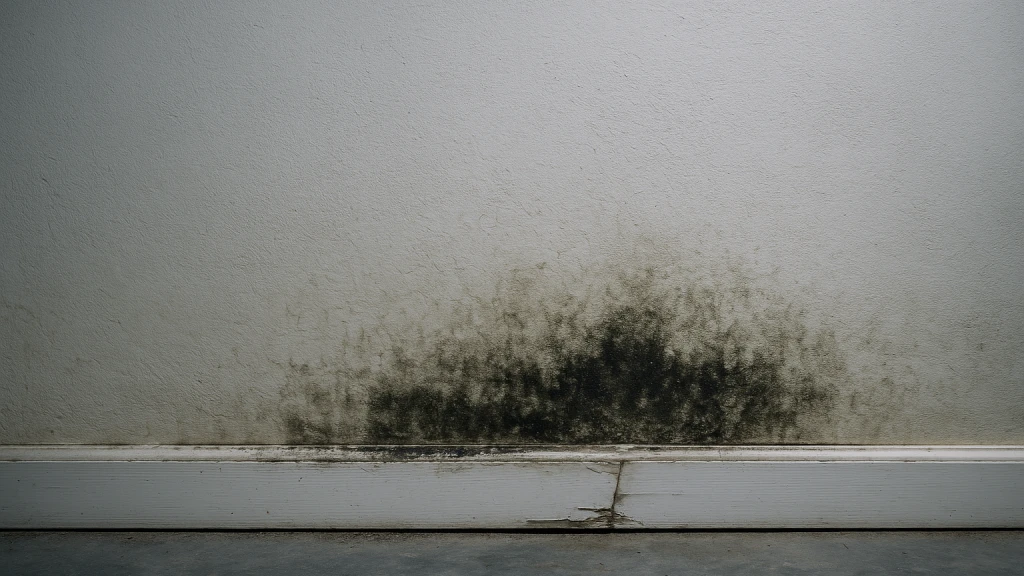
Why the basement is Saint Paul's number-one mold room
If there's a single place mold takes hold in a Saint Paul home, it's the basement. Our housing stock leans old — thousands of homes here predate 1940 — and many sit on fieldstone, limestone, or hollow concrete block foundations that were never meant to be dry living space. Add a high regional water table, clay soils that hold water against the wall, a spring snowmelt that saturates the ground, and decades of finished-basement remodels that trap humidity against cold concrete, and you have nearly ideal conditions for mold. It's not a sign you've done anything wrong; it's the predictable result of putting carpet, studs, and drywall against a 100-year-old wall in a cold, wet climate.
The frustrating part is that basement mold is usually invisible until it's significant. It grows behind finished walls, under carpet pad, inside the cavity along the cove joint where the wall meets the floor, and on the back side of paneling. The first clue is almost always the smell — that heavy, earthy basement odor that gets stronger in humid weather or when the furnace fan kicks on and pushes basement air upstairs. By the time you see growth on the surface, there's usually more behind it.
Where the water actually comes from
Effective basement mold removal in Saint Paul always starts with the same question: where is the moisture coming from? The honest answer is usually one or more of these:
- Seepage through the walls or cove joint — hydrostatic pressure pushing groundwater through block, stone, or cracks, worst during the thaw and after heavy rain.
- Surface water from downspouts dumping at the foundation, negative grading that slopes toward the house, or window wells that fill in a storm.
- High indoor humidity in summer, when warm humid air meets cool concrete and condenses — sometimes the only "leak" is the air itself.
- Sump and drain-tile issues, from a pump that can't keep up to a pit that overflows during snowmelt.
- Appliance and plumbing leaks — water heaters, washer hoses, and condensate lines that drip quietly in a corner nobody visits.
A remediation that ignores the source is just expensive demolition. The fix has to pair removing the mold with correcting the water, whether that means exterior drainage and regrading, a dehumidifier sized for the space, sump or drain-tile work, or sealing a specific crack.
The basement remediation process
A licensed crew handling a Saint Paul basement generally works in a clear sequence designed to keep spores from spreading upstairs through the open stairwell and the HVAC system:
- Containment: sealing the work area with poly and running a HEPA-filtered negative-air machine so spores don't ride basement air into the living space.
- Source control: stopping the water first — grading, drainage, sump, or leak repair — because removal is pointless while the wall keeps getting wet.
- Removal: cutting out and bagging mold-affected drywall, paneling, carpet, pad, and insulation, which absorb mold and can't be reliably cleaned.
- Cleaning and treatment: HEPA-vacuuming and damp-wiping salvageable framing and masonry, then applying an EPA-registered antimicrobial.
- Drying: dehumidifiers and air movers until framing and masonry reach a verified moisture content.
- Clearance and rebuild: ideally an independent post-remediation test before the space is refinished, this time with moisture-tolerant materials.
Why finished basements make it worse
A huge share of Saint Paul homes have a finished basement — a rec room, a guest suite, a home office — and that finish is exactly what turns a damp wall into a mold problem. Bare concrete that gets wet and dries is annoying; the same wall covered in framing, fiberglass insulation, and paper-faced drywall becomes a sealed, food-rich, poorly ventilated cavity where mold thrives unseen. When growth is found behind a finished wall, the affected materials generally have to come out so the cavity can be cleaned and dried, then rebuilt. It feels like overkill until you understand that you can't clean mold out of the back of drywall you can't reach. Where homeowners want to refinish afterward, pros often recommend rigid foam, treated framing, and inorganic materials that won't feed mold if the wall ever gets damp again.
What basement mold removal costs in Saint Paul
Cost tracks how much finished material has to come out and how much water work the fix requires. A small contained area of seepage mold behind a section of drywall can be a modest job; a fully finished basement with widespread growth, plus exterior drainage and a new sump, climbs quickly into the thousands. Porous materials like drywall, carpet, and insulation price toward the higher end because they're removed rather than cleaned. Our cost estimator lets you rough out a range, and the Saint Paul cost guide explains how pros price the work and where the money actually goes. The most important budgeting truth: spending on drainage and humidity control is what keeps you from paying for the same remediation twice.
Don't refinish over a damp wall
If you take one thing from this page, let it be this: never re-cover a Saint Paul basement wall until the moisture is solved and the cavity is dry. Painting waterproofer over a seeping wall or studding right back over a damp foundation seals the problem in and guarantees a repeat. Start with an honest inspection to find the water, fix that, then remediate and rebuild. Tell us what's going on in your basement and we'll match you with a licensed, independent Saint Paul–area pro for a free, no-pressure assessment.