
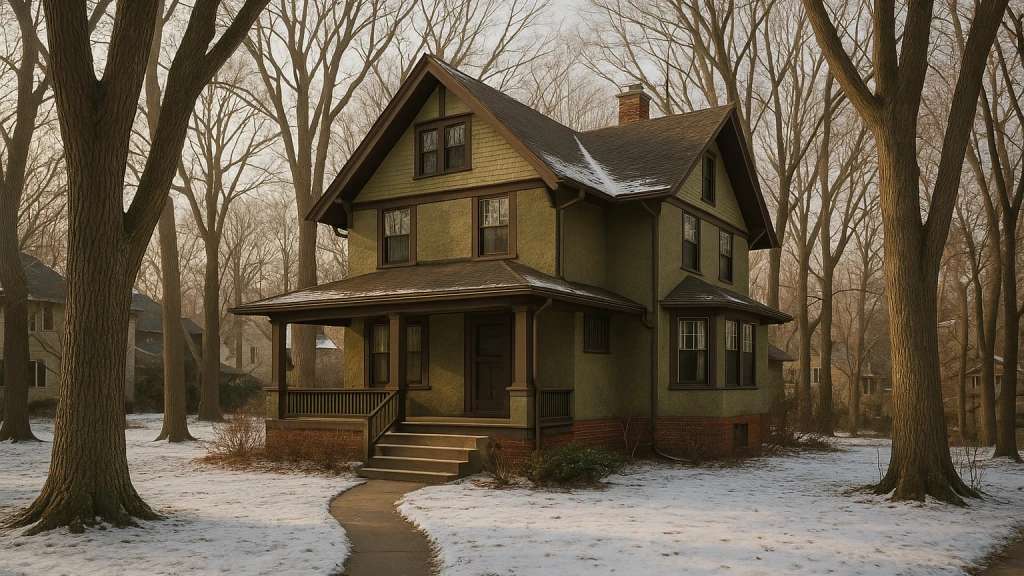
Mold in St. Anthony Park's wooded setting
St. Anthony Park has a distinctive feel — leafy, quiet, almost village-like, with vintage homes set among mature trees near the University of Minnesota's St. Paul campus in the 55108 ZIP. That wooded setting is exactly what makes it lovely, and it's also a quiet contributor to moisture problems. Heavy tree cover keeps lots shaded and slow to dry, holds humidity around foundations, drops debris that clogs gutters, and keeps roofs and north-facing walls damp longer after every rain and snow. The same canopy that makes the neighborhood beautiful keeps things wetter than a sunnier lot would be.
Shaded, slow-drying lots translate directly into damper basements. When the ground around a foundation never fully dries, the soil stays moist against the foundation walls, feeding seepage and humidity into the basement. Combine that with the neighborhood's older homes and their original stone or block foundations, and you get the damp, musty basements that drive a lot of our basement remediation referrals in St. Anthony Park. Clogged gutters from all that tree litter make it worse by dumping roof water right against the foundation.
Tightened-up homes and attic condensation
St. Anthony Park homeowners tend to be energy-conscious, and many of these vintage homes have been air-sealed and insulated to cut heating costs. That's smart, but in a cold climate it has a well-known side effect: a tighter house holds indoor humidity longer, and if that warm, moist air leaks into a cold attic, it condenses on the roof sheathing and grows mold there over the winter. We see attic-deck mold and frost regularly in homes that have been buttoned up without upgrading the attic ventilation and bath-fan venting to match. Our attic mold removal and ice dam and attic frost pages explain the mechanism and the fix.
Bath fans, kitchens, and trapped moisture
The same tightness that causes attic problems can cause moisture to linger in bathrooms and kitchens. In a leaky old house, humidity from showers and cooking escaped on its own; in a tightened one, it needs a properly vented fan to leave, and many vintage homes either lack good fans or vent them into the attic rather than outside — which just moves the moisture problem upstairs. Our bathroom and kitchen mold page covers how everyday moisture turns into mold when ventilation can't keep up.
Mature trees and chronic roof moisture
Those big trees also mean shaded, slow-drying roofs and constant debris. North-facing roof planes under heavy canopy can stay damp and grow moss and algae, and clogged valleys and gutters back water up under shingles and into the structure. Over time that chronic roof moisture feeds mold in the attic and the top-floor ceilings and walls. Keeping gutters clear and roofs draining is unglamorous but genuinely protective in a neighborhood this wooded.
How we help St. Anthony Park homeowners
Saint Paul Mold Remediation is a free referral service that matches you with licensed, independent mold professionals familiar with St. Anthony Park's shaded lots, vintage homes, and tightened-up building envelopes. You tell us the problem; they inspect, trace the moisture, and give you an honest written quote. We don't perform the work and there's no cost to you for the match. To understand pricing first, see our cost guide and estimator. When you're ready, tell us about your home.