
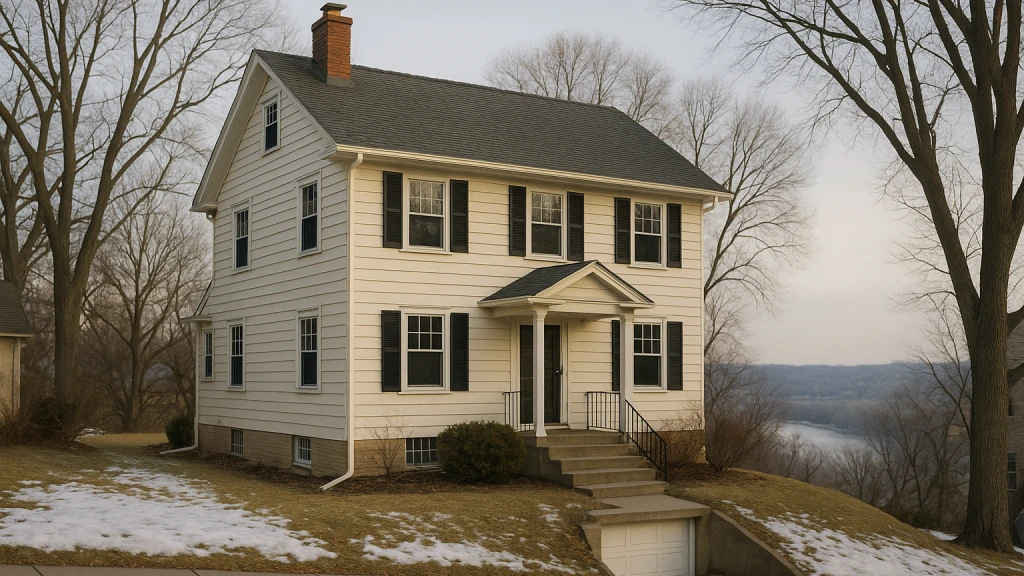
Mold in Highland Park's bluff-side homes
Highland Park is one of Saint Paul's most desirable neighborhoods, and its housing stock — mostly solid brick and stucco homes built between the 1920s and the 1950s, plus the newer construction rising around Highland Bridge on the old Ford site — comes with a very specific moisture profile. The neighborhood sits on the high ground above the Mississippi, and that geography cuts both ways. The views and the drainage are good, but the bluff lots and the proximity to the river mean groundwater pressure is a real factor in basements across the 55116 ZIP. When we get a call from Highland Park, it's usually a finished basement that's developed a musty smell, a tuck-under garage wall that's gone dark, or a stain spreading after a hard rain.
The finished basement is the through-line in this neighborhood. So many Highland homes have a paneled or drywalled lower level — a rec room, a guest suite, a home office — and those finishes are exactly what turns a minor seepage problem into a remediation job. Water wicks in at the cove joint where the wall meets the floor, or pushes up through the slab under hydrostatic pressure, and the finished wall traps it against cool concrete where nobody can see it. By the time the smell reaches the living space, mold has often been growing behind the drywall for weeks. Our basement mold removal page walks through how that hidden growth gets found and removed.
Tuck-under garages and the rooms above them
Highland Park has an unusual number of tuck-under garages, where the garage is built into the lower level of the house with living space directly above. These are a recurring mold source. The garage stays cold and often a little damp, the ceiling between the garage and the room above is frequently under-insulated, and warm humid air from the house condenses on those cold surfaces. We regularly find mold on the underside of floor framing over tuck-under garages, and on the walls of bonus rooms built above them. Fixing it means addressing the insulation and air-sealing, not just wiping the surface.
What the seasons do here
Highland Park sees the full Minnesota cycle. Spring thaw and snowmelt running off the bluff load the soil and raise the water table, which is when slab seepage and sump pumps get tested. Humid July and August fill basements with damp air that condenses on cool foundation walls. And winter brings the cold-climate classics: ice dams on the older steep roofs, attic frost in well-sealed homes, and condensation at the rim joist. A home that's bone-dry in October can have a moisture problem in February for entirely different reasons. Knowing which season is driving the moisture is half of diagnosing it correctly, which is why an independent inspection usually comes first.
Newer homes aren't immune
The Highland Bridge development and other newer Highland builds are tighter and better insulated, which is good for energy bills but means any moisture that does get in has fewer ways to dry out. Tight houses with under-sized or poorly ducted bath fans can hold humidity long enough to grow mold in bathrooms, closets, and around windows. New construction also has its own water-intrusion risks during the first few years as a house settles and flashing details get tested by real weather. Mold isn't only an old-house problem in this neighborhood.
How we help Highland Park homeowners
Saint Paul Mold Remediation is a free matching service, not a contractor. You tell us what you're seeing — the damp basement, the stained garage ceiling, the smell you can't place — and we connect you with licensed, independent mold professionals who actually work Highland Park and understand bluff-side groundwater and tuck-under construction. They'll inspect, find the moisture source, and give you a written scope and an honest quote. There's no charge to you for the match and no obligation. If you want to understand pricing before you call, our cost guide and estimator lay out the ranges. When you're ready, tell us about your home and we'll get you connected with a trustworthy Highland Park–area pro.