
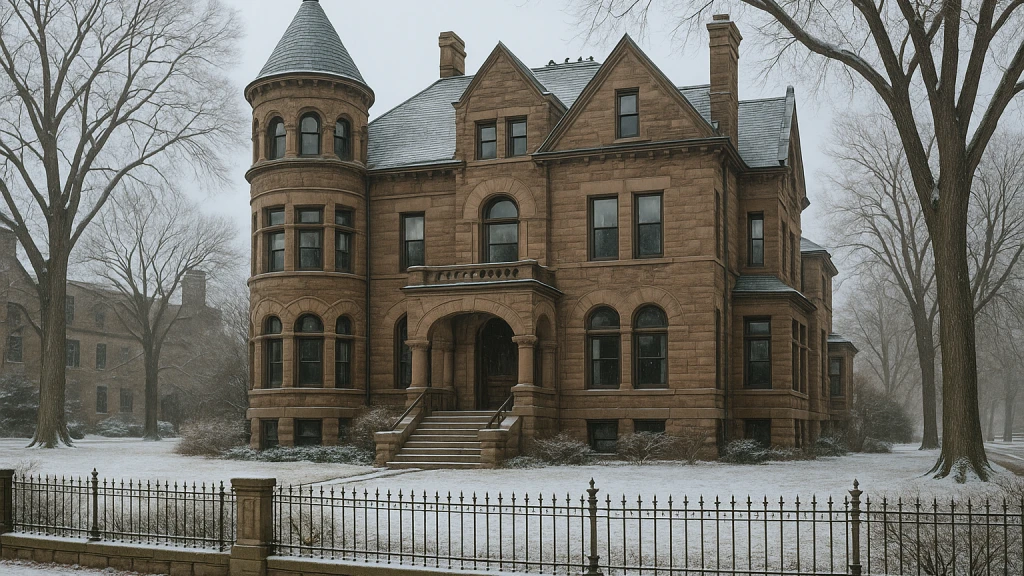
Mold in Summit Hill's grand historic homes
The homes along Summit Avenue and through Crocus Hill are some of the most architecturally significant in the country — large Victorian and turn-of-the-century mansions, carriage houses, and grand foursquares in the 55102 and 55105 ZIPs. They are also among the most complicated houses in the city to keep dry. Size, age, stone foundations, flat and low-slope roof sections, and a century of remodels and additions all combine to create more places for water to get in and more hidden cavities for mold to grow. When Summit Hill owners call us, the goal is almost always careful, minimally invasive work that protects irreplaceable historic finishes.
Scale is the first challenge. These are big houses with deep stone-walled basements, multiple roof planes, long plumbing runs, and complex framing. A leak in a third-floor valley can travel a long way before it shows up, and a damp corner of a huge stone cellar can grow mold unnoticed for a season. The sheer amount of building means more surface area for moisture problems, and it means diagnosis — finding exactly where the water is coming from — matters even more than usual. Our inspection and testing page explains how that detective work is done.
Stone foundations and deep cellars
The original basements under Summit Hill homes are typically rubble-stone or early masonry, deep and cool and historically damp. Many have been partially finished — a wine cellar, a laundry, a renovated lower level — and those finishes are where damp stone turns into a mold problem. Groundwater wicks through the masonry, the cove joint weeps, and finished surfaces trap the moisture. Remediating these spaces well means respecting the original structure while managing the water and removing the mold, which is specialized work. Our basement mold removal page covers the approach.
Flat and low-slope roofs
Many of these grand homes have flat or low-slope roof sections — over porches, bays, additions, and the mansard or built-up portions of the main roof. Low-slope roofing is far more prone to standing water and slow leaks than a steep roof, and a small failure in a membrane or flashing can feed water into the structure for a long time before anyone notices a ceiling stain. That hidden, chronic moisture is a classic mold driver in Summit Hill homes, and tracing it back to the roof detail responsible takes someone who knows these buildings.
Layered remodels and hidden cavities
A century of updates leaves these houses full of hidden cavities — chases, furred-out walls, closed-off rooms, abandoned plumbing and chimney runs — any of which can hold moisture and mold out of sight. Add the original steep roofs' tendency toward ice dams and the attic condensation that comes with tightening up a drafty old mansion, and you have a lot of potential moisture sources. The advantage of working with a pro who knows historic Saint Paul homes is that they know where to look.
How we help Summit Hill and Crocus Hill owners
Saint Paul Mold Remediation is a free matching service. We connect you with licensed, independent mold professionals who have experience with large historic Saint Paul homes — people who will diagnose carefully, contain and remove mold without damaging historic fabric, and give you an honest written scope and quote. We don't perform the work and there's no cost to you for the match. Because these are bigger, more complex jobs, our cost guide and whole-home remediation page are worth a read before you call. When you're ready, tell us about your home and we'll get you connected.