
Keeping a Saint Paul basement dry
The basement is where most Saint Paul mold problems start, and the good news is that basement mold is largely preventable. Almost every basement mold situation comes down to one of two moisture sources: liquid water getting in from outside, or humid air condensing on cold surfaces inside. Control both and you control the mold. This guide walks through the practical, mostly affordable steps that keep a Minnesota basement dry through spring thaw, summer humidity, and everything in between — roughly in order of bang for the buck.
Start outside: grading and gutters
The cheapest and most effective basement-drying work happens outside the house, before water ever reaches the foundation. Two things matter most. First, grading: the soil around your foundation should slope away from the house, dropping about six inches over the first ten feet, so surface water runs away rather than pooling against the wall. Settled soil that slopes back toward the foundation is a leading cause of seepage. Second, gutters and downspouts: clean gutters and downspout extensions that carry roof water at least several feet from the foundation prevent an enormous amount of basement moisture. In wooded neighborhoods like St. Anthony Park, keeping gutters clear of leaf debris is a constant but vital chore. Fixing grading and gutters solves a surprising share of basement moisture problems for very little money.
Manage groundwater: drainage and a sump
In Saint Paul's high-water-table areas — near Como Lake, Lake Phalen, and the river bluffs — surface fixes aren't always enough, and you need to manage groundwater that pushes up under hydrostatic pressure. Interior drain tile feeding a sump pit is the standard solution, collecting water that enters at the cove joint and pumping it out before it reaches your floor. If you have a sump, make sure it's reliable and consider a battery backup, because in these neighborhoods a sump failure during a spring melt or a summer storm is one of the fastest routes to a flooded, moldy basement. Our water damage page covers what happens when a sump fails.
Control humidity: the dehumidifier
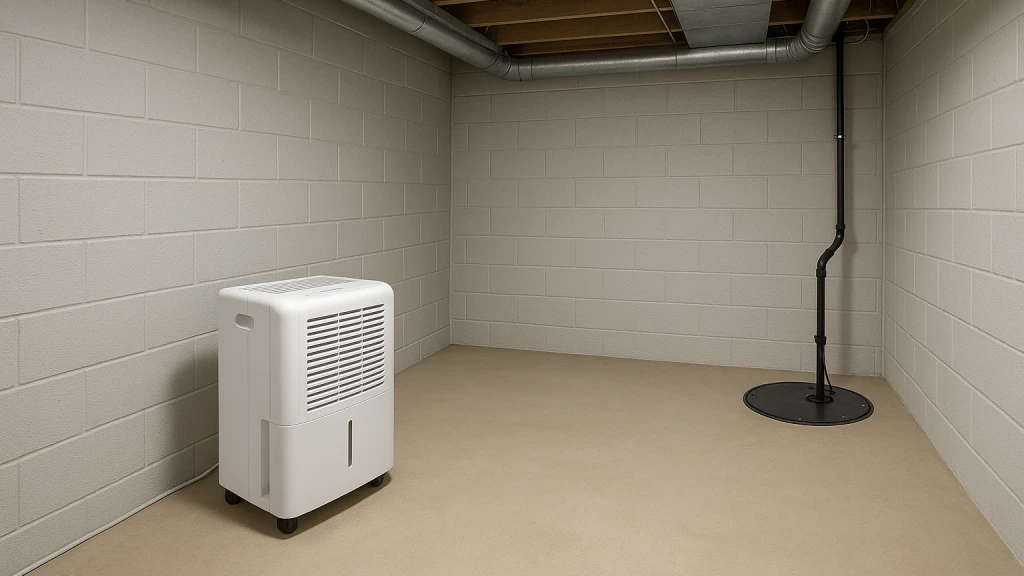
Even a basement with no liquid-water intrusion can grow mold from summer humidity alone. Warm, damp summer air condenses on cool foundation walls and slab, and the fix is a properly sized dehumidifier running through the humid months to hold relative humidity below about 50 percent. This single appliance prevents a large fraction of Saint Paul basement mold, and it's far cheaper than remediation. Pair it with a hygrometer so you can actually see your humidity level and know the dehumidifier is keeping up.
Seal the air leaks
The rim joist — the band at the top of the foundation where the framing sits — is a major source of both winter condensation and summer humidity infiltration, and air-sealing and insulating it properly pays off in both seasons. Sealing other air leaks that let humid air reach cold surfaces helps too. This is also where over-tightening a house without ventilation can backfire, so it's worth doing thoughtfully; our building-science guide explains the balance.
Watch the finished basement
If your basement is finished, the finishes themselves are a risk because they trap moisture against the foundation where you can't see it. Avoid wall-to-wall carpet directly on below-grade concrete, be cautious about insulation and framing held tight against foundation walls without a moisture strategy, and stay alert to any musty smell, which is often the first sign of mold growing behind the finish. If you're finishing a basement, doing the moisture control first is far easier than fixing mold afterward.
Catch problems early
Finally, pay attention. A musty smell, efflorescence (white mineral residue) on the walls, peeling paint, rusting metal, or condensation on the walls are all early warnings that moisture is present. Acting on them early — before mold spreads behind finishes — is the difference between a cheap fix and an expensive remediation. Our signs of mold guide covers what to watch for. If your basement already has a moisture or mold problem, tell us about it and we'll connect you with a local pro who can diagnose and fix the source, not just the symptom.